Empowering Hour Reflection: Voice, Authority, and Thinking Clearly
What I learned from Loknath Koirala and Umes Shrestha in a two-hour session at King’s College Nepal
12/3/2025
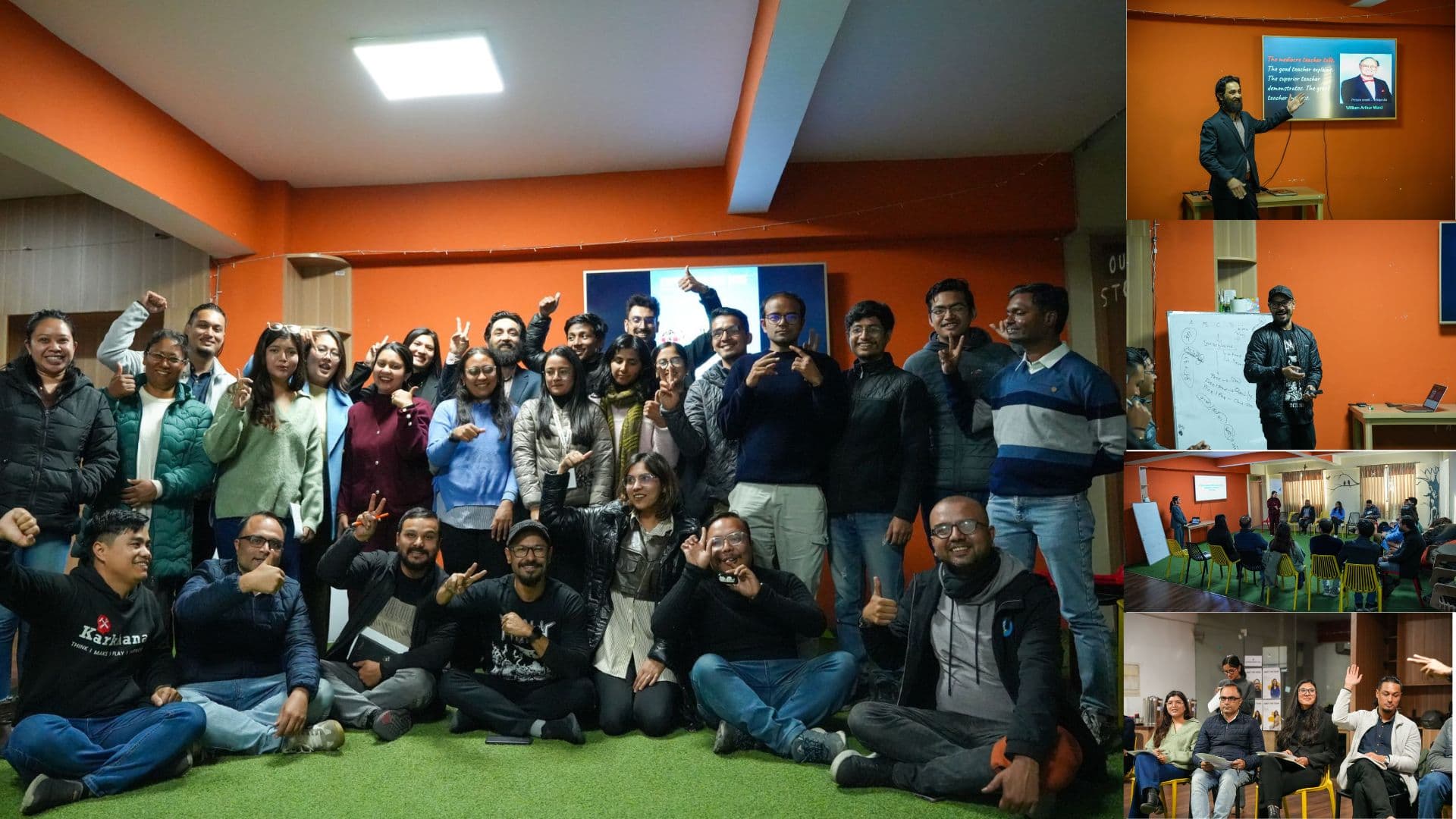
I attended my first Empowering Hour session at King’s College Nepal with curiosity, but I left with far more than I expected. The session was around two hours, and it was not just a training event. It felt like a strong reminder of what teaching really is: voice, leadership, thinking, and responsibility.
The session opened with a featured presentation titled “Who am I as a teacher?” by Loknath Koirala. Before he even went deep into his content, I was already impressed by one thing: his command over his voice. The way he spoke carried confidence and authority, and it immediately captured the room. I honestly thought, “Maybe someday I want to develop my voice to that level too.”
What surprised me even more was that after the program, he seemed very soft-spoken and calm. That contrast made me realize something important: stage confidence is not only personality, it is also a skill. I wanted to ask him how he built that confidence and vocal control. I did not ask this time, but I hope I will in the next session.
How he became a teacher
Mr. Koirala shared his journey honestly. He talked about failing multiple subjects, struggling with discipline, and even changing schools several times. Teaching was not something he started with as a perfect student story. What changed his thinking was an experience involving his uncle, who was a teacher.
He described going to a government office to meet his uncle, but a guard was not allowing him inside. Then a government officer, who happened to be his uncle’s former student, showed strong respect and helped him enter. What amazed him was the respect: even though the former student was now in a higher position, he still treated his teacher with deep honor. That moment stayed with him and made him realize the long-term impact a teacher can have.
He also shared a classroom moment from his early teaching days. While he was teaching, the head of the school asked, “May I come in?” In a humorous way, he replied, “No.” To his surprise, the head stayed outside. The message he took from that was powerful: inside the classroom, the teacher holds responsibility and authority. In that space, the teacher leads.
The quote, and the idea he challenged
During the session, he referenced a famous quote by William Arthur Ward:
“The mediocre teacher tells. The good teacher explains. The superior teacher demonstrates. The great teacher inspires.”
At first, this quote sounds like the perfect summary of great teaching. It suggests a progression from basic instruction to true inspiration, where students become self-motivated and learn beyond the classroom.
But then Mr. Koirala challenged us to think deeper. He argued that humans are psychologically tuned to listen to leaders. He used examples like rishi-munis and political leaders to show that societies learn through listening. In that sense, “telling” is not automatically bad. In his view, a great teacher also tells, but tells with clarity, purpose, and responsibility. That reframing stayed with me because it made me rethink lectures and classroom communication. It is not only about avoiding telling, it is about how a teacher tells.
Logical fallacies in education (my first exposure)
After that, Umes Shrestha, Head of CIPL, led a session on logical fallacies in education. This was my first time learning about logical fallacies in a structured way, and it was genuinely new and exciting. It made me reflect on how flawed reasoning can quietly enter teaching, feedback, classroom decisions, and even assessment.
We also played several interactive games and activities to identify fallacies in real situations. The best part was that it was not just theory; it was hands-on. It helped me understand why reducing logical fallacies is not about sounding smart, it is about becoming a more fair and effective teacher.
Meeting new people, learning outside my comfort zone
I attended this session with my mentor Diperson Shrestha, with whom I also work as a Teaching Assistant at King’s College. During the workshop, Mr. Umes cleverly reshuffled the groups, which completely broke our usual pairing. That small move mattered a lot because it pushed everyone to talk, collaborate, and learn with new people.
Because of this reshuffle, I was paired with Santosh Mehta, an ex-founder and mechanical engineer with strong experience in product design, sales, marketing, and 3D printing innovation. Working with him during the activities was genuinely fun and insightful. He brought a practical mindset into the discussions, and I am glad this session helped me connect with someone so talented.
What I am taking forward
This first Empowering Hour session reminded me why I want to grow in education. It also gave me a clearer picture of what makes teaching impactful. For me, the key takeaways were simple but powerful:
- Voice and presence are part of teaching, and they can be developed.
- A teacher’s authority in the classroom is not ego, it is responsibility.
- Clear thinking matters: logical fallacies can quietly harm learning if we ignore them.
- Growth often happens when we step outside comfort zones and learn with new people.
I am looking forward to attending more Empowering Hour sessions and continuing this journey of becoming not just a teacher, but a thoughtful and impactful one.