Beyond ChatGPT: Teaching AI and Digital Citizenship to 644 Students Across Nepal
How introducing responsible AI literacy to students in Nagarjun and Budhanilkantha is shaping the next generation's relationship with technology.
7/18/2026
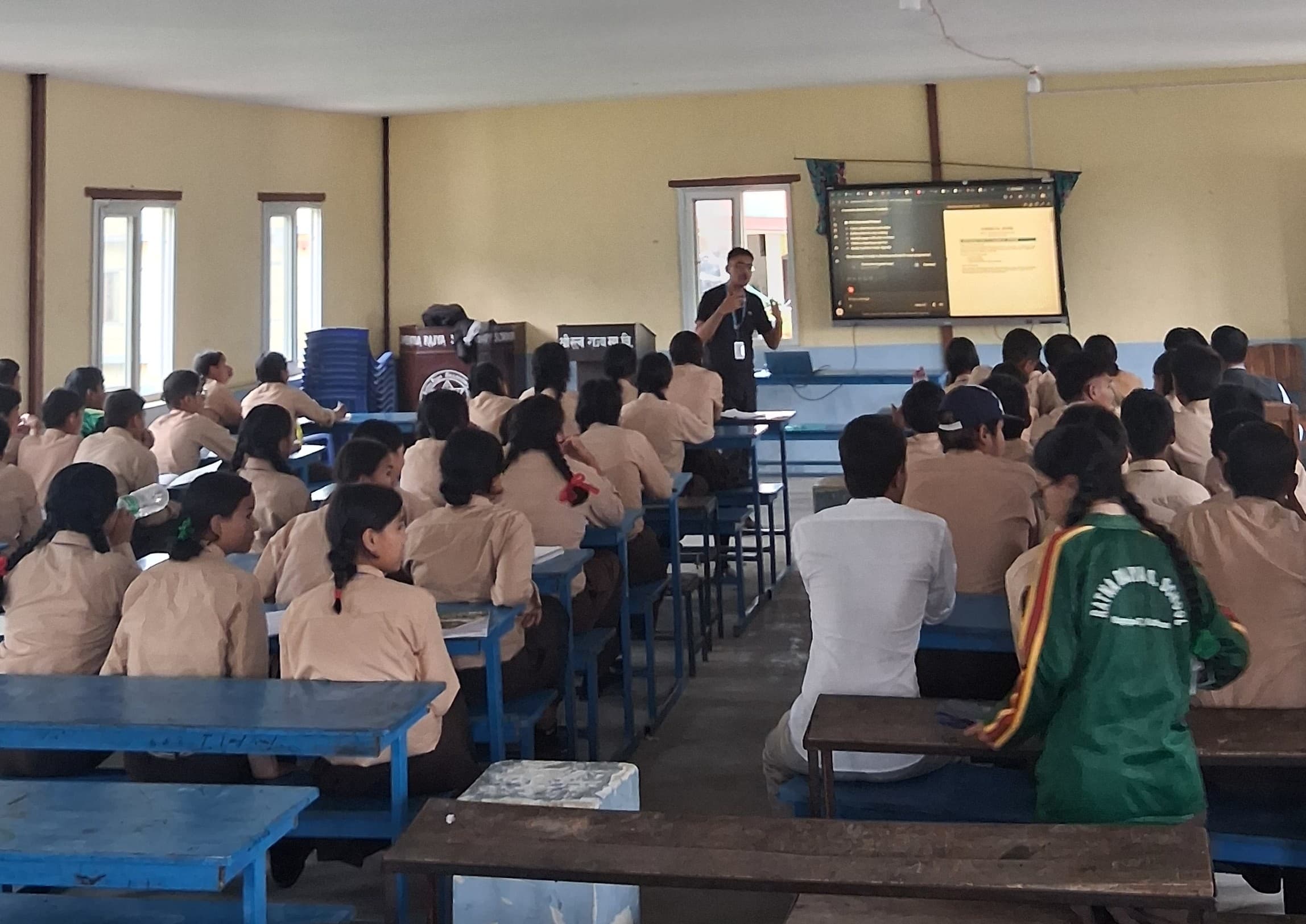
The silence that fell over the classroom when we played the Bhojpuri World Cup song—the one we'd created together using AI music generation just minutes before—told us everything we needed to know. For a moment, no one moved. Then the room erupted.
That's when I realized this was about far more than introducing students to a new tool. This was about shifting how an entire generation would understand and relate to artificial intelligence.
The Journey: 9 Schools, 644 Students, and a First Encounter
Between June 23 and July 6, 2026, my team and I—Diperson, Anushka, Upashi, Tavishna, Bibek, and Sujal—delivered AI and Digital Citizenship sessions across 9 schools in Nagarjun and Budhanilkantha Municipalities in Nepal. We spent 17 hours in classrooms, traveled over 175 kilometers, and worked with students from grades 7 through 10.
But these numbers barely capture what happened.
Most of the students we met had only one reference point for AI: ChatGPT. For many, it was the only tool they'd ever encountered. They understood it as a chatbot—useful, perhaps, but singular. Limited.
We came to expand their world.
What We Showed Them
Our sessions went far beyond "what is AI?" We demonstrated the full spectrum of what's possible right now:
Text generation — Not just essays, but brainstorming, creative writing, and problem-solving.
Visual creation — Students watched as text became images. We asked them: "What would you create if you could visualize any idea instantly?"
Document and presentation design — We showed how AI could help organize their thoughts into polished slides and documents, taking the friction out of homework and projects.
Music and video generation — This is where it clicked. We didn't just tell them AI could create music; we created something with them. The World Cup song in Bhojpuri wasn't just a technical demo—it was collaborative, unexpected, and genuinely fun. That's when the abstract became real.
The Missing Conversation
But capability without wisdom is dangerous. So alongside the "what's possible," we emphasized the "how should we use it."
We talked about digital citizenship in ways that felt immediate and relevant to their lives:
- Responsible use: These tools belong to everyone, but not everything we create with them should be used or shared.
- Critical thinking: AI can generate plausible-sounding information that isn't true. How do you verify? How do you think critically about what it tells you?
- Privacy and ethics: What data are you sharing when you use these tools? Who owns what you create?
- Creativity vs. replacement: AI isn't here to replace you; it's here to amplify what you can do if you understand it properly.
For many of these students, this was the first time anyone had framed AI as something requiring both excitement and responsibility. The conversation shifted from "wow, this exists" to "now, how do we use this thoughtfully?"
The Moments That Mattered
You can't capture everything in metrics, but these moments told us we'd done something right:
Teachers staying after class. Once the students left, several teachers lingered with their own questions: How could they use these tools in their teaching? Could AI help them prepare better lessons? These weren't skeptical questions—they were curious ones. The barrier between adoption and resistance often starts with the adults in the room, and seeing teachers lean in was encouraging.
Students not wanting to leave. Sessions would officially end, but clusters of students would remain, sharing the AI-generated content they'd created, asking follow-up questions, and exploring possibilities on their own devices.
The study notes question. One student asked, almost tentatively: "Can AI help me make my study notes better?" It was a simple question, but it revealed something profound—they weren't thinking of AI as a shortcut or a threat. They were thinking of it as a tool for learning, a collaborator in their education.
Schools We Visited
Here's the complete list of schools where we conducted AI and Digital Citizenship training sessions:
-
Shree Janauddhar Sec School — Nagarjun Municipality (June 23, 2026 | Grade 9 | 64 students)
-
Mahankal Janajagrit Sec School — Budhanilkantha Municipality (June 24, 2026 | Grade 9 | 64 students)
-
Shree Ganesh Sec School — Budhanilkantha Municipality (June 24, 2026 | Grade 10 | 88 students)
-
Shree Budhanilkantha Sec School — Budhanilkantha Municipality (June 25, 2026 | Grade 10 | 99 students)
-
Shree Panchakanya Sec School — Budhanilkantha Municipality (June 25, 2026 | Grades 7–10 | 64 students)
-
Shree Sitapaila Sec School — Nagarjun Municipality (June 26, 2026 | Grades 9–10 | 92 students)
-
Shree Yagyamati Sec School — Budhanilkantha Municipality (June 29, 2026 | Grades 9–10 | 68 students)
-
Shree Madan Ashrit Adarsha Sec School — Budhanilkantha Municipality (June 30, 2026 | Grades 8–9 | 45 students)
-
Shree Ratna Rajya Sec School — Nagarjun Municipality (July 6, 2026 | Grade 9 | 60 students)
Why This Matters Now
Nepal's education system, like many in the Global South, faces structural challenges: limited resources, varying access to technology, and curricula that often lag behind global developments. But AI is arriving here just as it's arriving everywhere else. The question isn't whether students will encounter it; it's whether they'll understand it.
When students from rural and semi-urban areas get their first introduction to AI from someone who frames it as both powerful and responsible, it shapes how they'll think about it going forward. They won't see AI as magic or threat. They'll see it as a tool that requires thought, care, and wisdom to use well.
Gratitude
None of this would have been possible without:
Nepal STEM Alliance, for creating the opportunity and trusting us to bring this vision to classrooms.
The educators at each school, for opening their doors and creating space for exploration.
My teammates, for bringing energy, creativity, and genuine care to every session. Teaching alongside Diperson, Anushka, Upashi, Tavishna, Bibek, and Sujal reminded me that the best learning happens in community.
The students, for their curiosity, their questions, and their willingness to imagine what they could create.
What's Next
The work doesn't end when the session ends. Real impact comes from what students do with this knowledge weeks and months from now. Do they stay curious? Do they explore further? Do they use these tools responsibly? Do they teach their peers and families?
We can't know yet. But if even a fraction of the 644 students we met now approach AI with both enthusiasm and critical thinking, if they understand themselves not as passive consumers of AI but as potential creators and thoughtful users—then those 17 hours and 175 kilometers will have been worth it.
AI is coming to Nepal, as it's coming everywhere. The question we asked in every classroom remains the question we all need to grapple with:
Now that you know what's possible, how will you choose to use it?
If you're an educator, organization, or institution interested in bringing AI literacy and digital citizenship training to your classrooms, I'd love to hear from you. The conversation about responsible AI adoption needs to happen everywhere—and it's best when it happens early.